The Rufsau Rules
Forced play, Davonlaufen (running away), and the special rules around the Sau (ace).
In a Rufspiel you call yourself a partner — the one holding the called Sau (the Rufsau). Four extra rules apply to them, so the Sau doesn’t surface right at the start. Here they are — and at the end you judge for yourself whether you may run away (davonlaufen).
Open the lesson in the app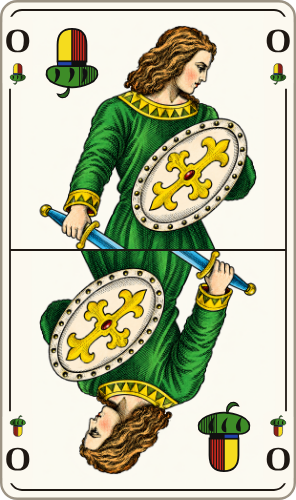
You must hand over the called Sau
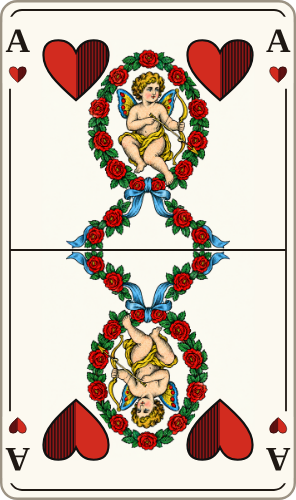
When the called suit (here: Gras) is led for the first time and the Sau has not yet fallen, then as the partner you must give up the called Sau when you follow. It’s just a special case of the Bedienpflicht (the duty to follow suit): the suit is led + you hold the Sau = you must play the Sau. No excuse.
Don’t lead a different Gras
As long as the Sau isn’t yet free, you may not lead any other Gras card than the Sau itself. Meaning: you can’t come out with a small Gras to test the suit — either lead the Sau, or no Gras at all. There’s only one exception: Davonlaufen (running away, just below).
When you may run away
If you hold at least four cards of the effective suit Gras — the Sau among them — AND no Gras has ever been led yet, then you may, as an exception, come out with a different Gras card (not the Sau). That’s called Davonlaufen. From that moment the Sau is free: rules 1, 2 and 4 no longer apply.
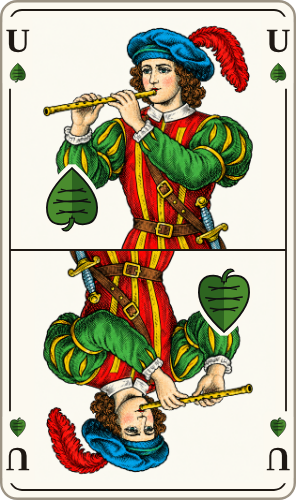
Careful when counting: Gras-Ober and Gras-Unter are trump, not Gras — they do not count. Only real Gras (Ass, Zehn, König, Neun, Acht, Sieben) counts.
Don’t schmier the Sau away
When you can’t follow a foreign suit and have to discard, you may not schmier the called Sau onto a foreign trick (schmieren = piling points onto a trick). Only in the 8th (last) trick may you unload the Sau — by then the game is over anyway.
These rules apply only to you as the partner. Everyone else — the declarer included — may lead or follow Gras quite normally, to “search out” the Sau.